NITDA, CBN Push National Sovereign Cloud to Secure Nigeria’s Digital Future
By Azeez Ajibola Afolabi
The National Information Technology Development Agency, NITDA, and the Central Bank of Nigeria, CBN, have renewed their push for digital sovereignty with a joint drive to implement the National Sovereign Cloud Initiative and enforce data localisation for critical national infrastructure.

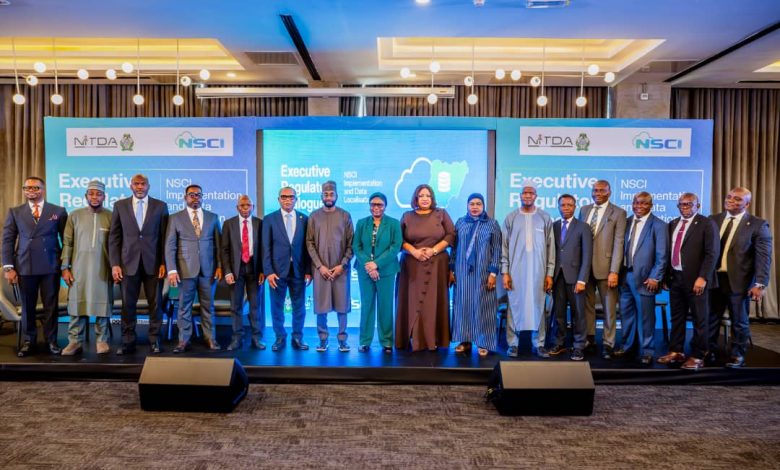
The commitment was restated at an Executive Regulatory Dialogue organised by NITDA in partnership with the CBN in Lekki, Lagos. The forum brought together regulators and operators from banking, telecoms, data centres and the broader technology ecosystem to chart a path for retaining national control over the digital systems powering Nigeria’s economy.
In his welcome address, NITDA Director-General, Kashifu Inuwa, CCIE, said digital sovereignty has become a national priority as the economy becomes increasingly dependent on digital platforms, especially in financial services.
“Imagine what will happen to our economy if tomorrow a major disruption or geopolitical crisis prevents our banks from accessing critical digital infrastructure hosted outside our country. Can our citizens still transfer money? Can businesses still receive payments? Can our banks keep processing transactions? Can our economy continue functioning?” Inuwa asked.
He said the question goes beyond technology to economic security, financial stability and national control.
According to him, digital sovereignty is not about isolation or building everything locally, but about building capacity to make informed choices.
“Digital sovereignty is not about politics. It is not about isolation. It is not about building everything ourselves, but it is about building our digital capacity to compete in the world we are today,” he said.
Inuwa cited the financial sector as proof of how deliberate regulation can drive innovation, noting how the CBN’s cashless policy forced technology upgrades that opened the door for Nigeria’s fintech boom. He commended the CBN for leading again and said the financial sector will be the first to comply with the National Sovereign Cloud Initiative.
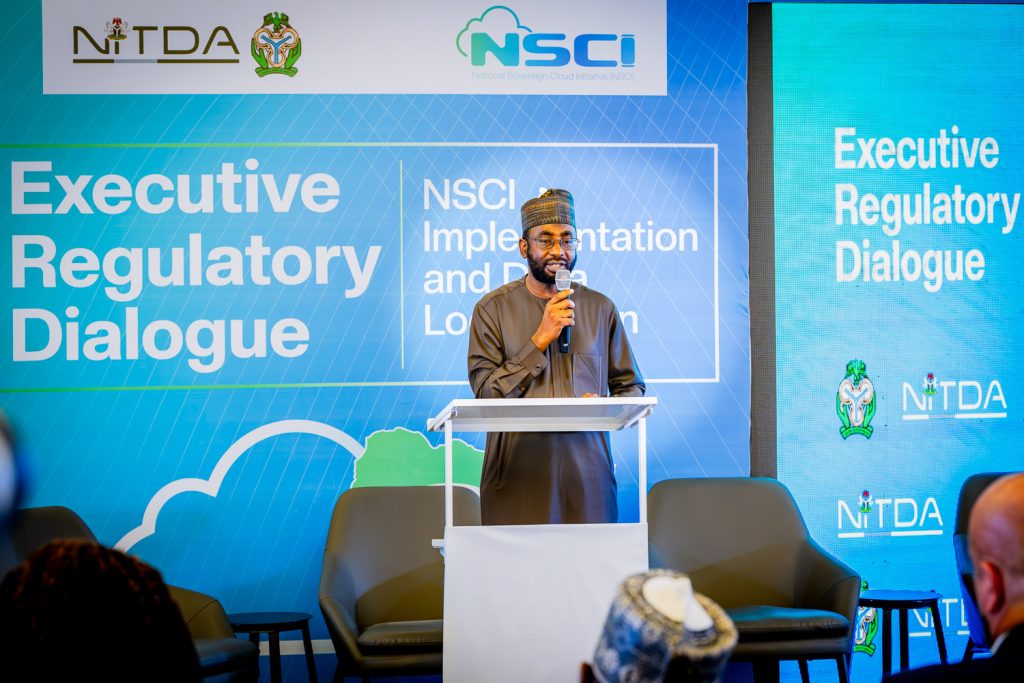
He explained that NITDA’s role is to provide standards and the overarching policy framework that sector regulators can adapt, while implementation will require collaboration among banks, telcos, data centre operators, system integrators, local tech firms and global cloud providers.
“We have done it before, and we are going to do it now. So this is not something you can doubt; it is something that already exists,” he said.
Inuwa said implementation will be guided by an assurance framework that leverages existing international certifications while ensuring compliance with Nigeria’s sovereign architecture requirements, with local certification options also under consideration.
He listed the core principles of the initiative as control, independence, resilience, risk management and freedom of choice, stressing that Nigeria must be able to sustain essential services during external disruptions and avoid vendor lock-in.
“Submarine cable disruption cannot automatically affect our payment system,” he said.
In his keynote, CBN Deputy Governor, Financial System Stability, Mr. Lamido Abubakar Yuguda, said the Bank is committed to strengthening financial stability, cybersecurity and protection of critical financial data through the NSCI and data localisation.
Yuguda praised NITDA’s leadership and noted that the rise of digital payments, fintech, mobile money and digital banking has deepened the sector’s reliance on digital infrastructure. He called on financial institutions to strengthen cybersecurity, business continuity, disaster recovery and risk management, and to comply with data localisation requirements ahead of the January 1, 2027 deadline for critical payment transaction data.
“Our collective objective should be clear: to build a digital financial ecosystem that is innovative without compromising security, sovereign without becoming isolated and resilient enough to sustain public confidence,” Yuguda said.
Presenting pre-event survey findings, Special Assistant to the NITDA DG on Policy, Dr. Muhammad Aminu Lawal, said stakeholders flagged regulatory clarity, migration timelines and local infrastructure capacity as urgent issues ahead of the 2027 deadline.
On the supply side, the survey showed encouraging readiness: 79 percent of 42 digital infrastructure and service providers surveyed said they can accommodate additional financial-sector workloads, while 74 percent said they can onboard new financial customers within three months.
He noted that much of the planned infrastructure expansion is expected in 2027, with financing costs, power supply and foreign exchange identified as major constraints.

The survey called for clear written regulatory guidance, phased or risk-based implementation milestones, a defined exceptions process, and a verified list of assured local infrastructure providers.
Dr. Lawal concluded that coordinated action by NITDA, CBN and industry is needed to address uncertainties, strengthen local capacity and ensure a smooth transition to Nigeria-based hosting and management of critical data.